
Otoplasty in Paris 16 — surgery for prominent ears
Surgery for prominent ears is common. The prominent appearance results from two small malformations of the cartilage of the auricle, present from birth.
French version — the French version is the authoritative one.
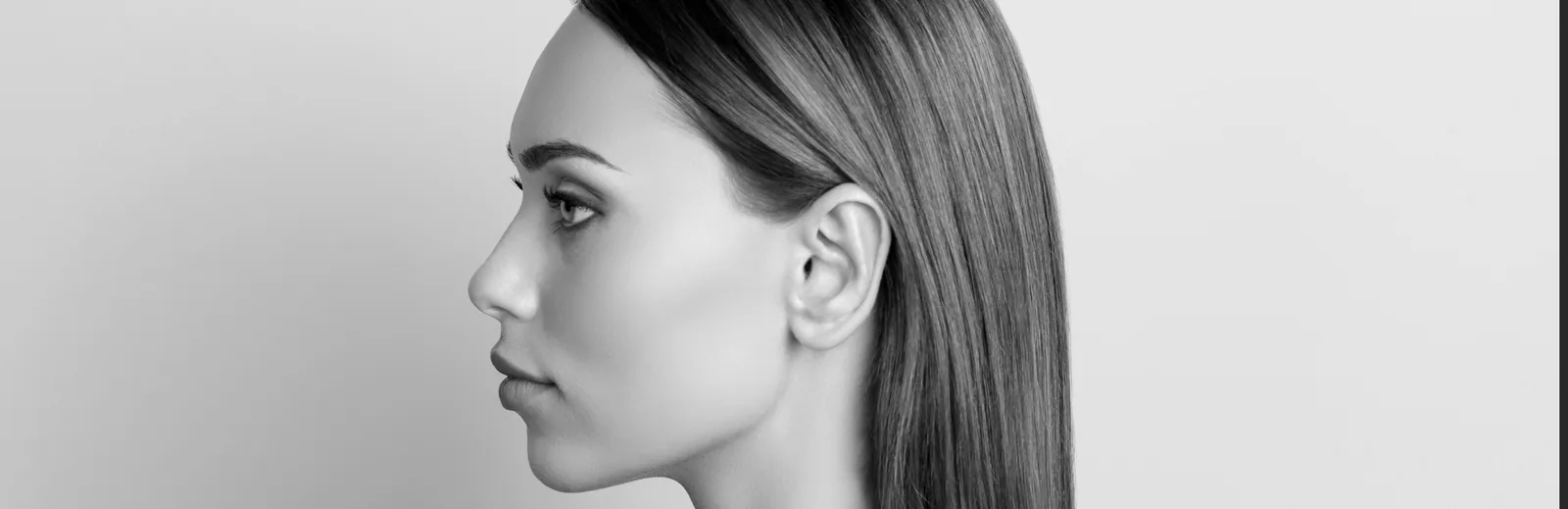
Surgery for prominent ears is common. The prominent appearance results from two small malformations of the cartilage of the auricle, present from birth.
Otoplasty corrects the position and shape of the auricle by reshaping the cartilage. It changes neither hearing nor the ear canal.
Because these two small defects of the cartilage can cause significant psychological distress, in particular from childhood onwards.
Because the child is teased and their ears become an obsession: a child who systematically arranges their hair over their ears, or who refuses certain activities, often expresses this without putting it into words.
There is no age for having the operation. For a child, I advise waiting until they ask for it themselves.
This often happens on starting primary school, around six or seven, or on starting secondary school, around twelve or thirteen. This principle is not a formality: an otoplasty carried out at the request of the parents alone, on a child who has not expressed it, is badly lived.
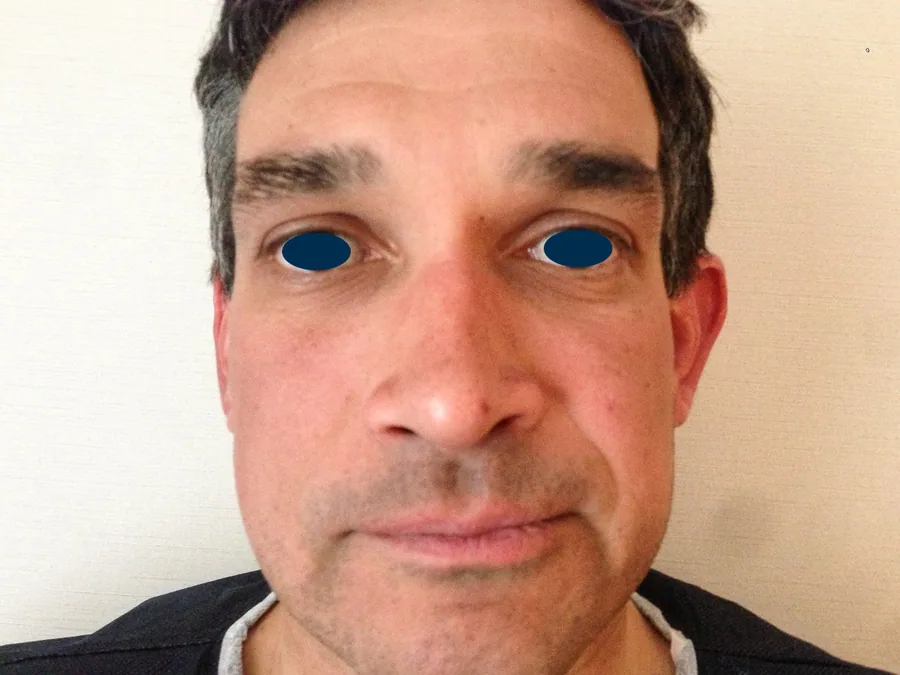
Otoplasty is carried out as day surgery, with discharge the same evening. It is most often performed under sedation combined with local anaesthesia. The operation lasts between forty-five minutes and one hour.
This operation is not painful.
The moulding helmet dressing, applied at the end of the operation, is removed after twenty-four hours in consultation by the surgeon. A tennis-style headband is then fitted and should ideally be kept on for one month.
A swollen appearance is normal for at least a fortnight. Sport is contraindicated for one month.
The headband of the first few days is the main change to daily life, before giving way to a night-time band for several weeks. Local care is delivered by nurses at the practice and the clinic. The surgeon sees you within seven days, then between day ten and day fourteen. The anaesthetist remains reachable to adjust pain relief in the early days. For children as for adults, the calendar is handed over in writing before surgery. It sits within post-operative care common to every procedure.
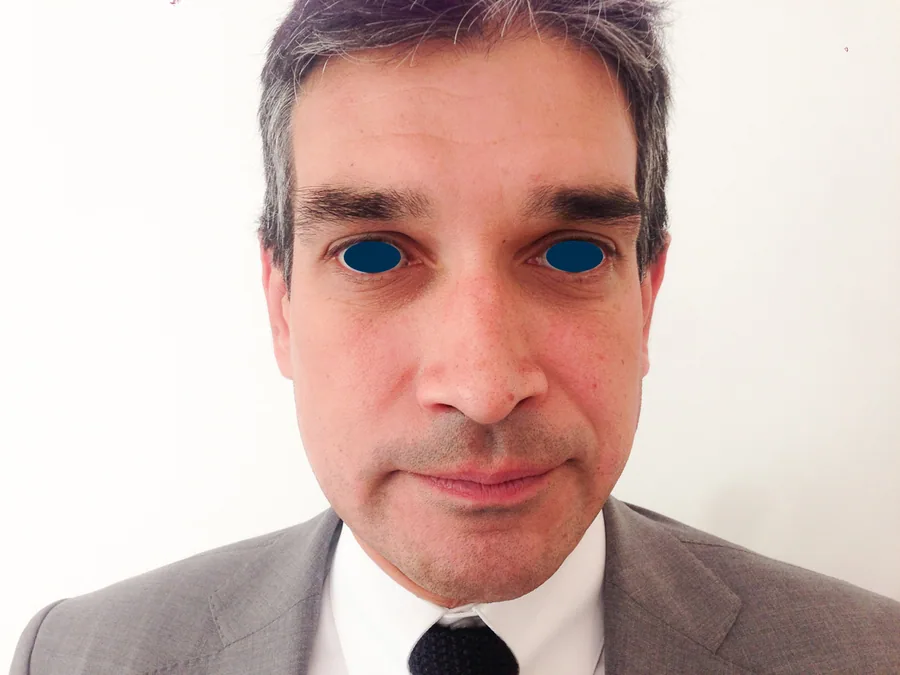
The final result is obtained on average around the second month. The retroauricular scar, for its part, may continue to evolve for a year.
The commonest risk is a haematoma at the back of the ear.
Internal stitches may work their way out, sometimes several years after the operation. It is then enough to remove them under sterile conditions in consultation.
The other complications are set out in detail in the SoFCPRE information leaflet.
Correction of prominent ears may be covered by French health insurance where there is significant psychological impact and an objective malformation. These two conditions are cumulative and are assessed during the consultation, which gives rise to a prior authorisation request.
Yes, where the asymmetry concerns only one side. The objective is then to achieve symmetry with the unoperated ear, which means measuring it carefully before the operation.
A few days are usually enough, the time for the dressing to be removed. The night-time headband then continues for a month, and sport remains contraindicated during that period.
Partial recurrence remains possible, since cartilage retains a memory of its shape. It is limited by wearing the headband regularly during the first month.
Last updated: August 2026 · Medical content reviewed by Dr Benjamin Pulvermacker, board-qualified plastic surgeon in Paris 16.
It suits prominent or malformed ears, in children from the age of seven when the request comes from the child, as well as in adults. It does not suit a request made by parents against a child's indifference: the operation is done for the person who lives with it. In an adult anxious about anaesthesia, the procedure can be carried out under local anaesthetic.
Otoplasty corrects the position and the folds of the cartilage; it does not make two ears strictly symmetrical — no pair of ears is, naturally. Specific risks: haematoma, cartilage infection (chondritis, rare but serious), partial recurrence of the prominence, hypertrophic scars behind the ear, sensitivity to cold in the first months. A protective headband is worn at night for several weeks.
A question about this procedure ?
Call 01 47 20 48 70You are still hesitating
A consultation commits you to nothing.
A proportion of consultations end with no indication, or with a decision to wait. These are normal outcomes, and they are said to your face.
What happens at a first consultation →Consultation
The secretariat answers from Monday to Friday, 9 a.m. to 6 p.m.
You have decided
Give your availability, the practice offers you a slot.
My availabilityYou would rather speak
Leave a number and a time. The secretariat calls you within 48 working hours.
Be called backYou are gathering information
A question, without an appointment. The secretariat passes it on, answer within 48 working hours.
Ask a questionOr by telephone : 01 47 20 48 70Exchanges are covered by medical confidentiality.
A detailed quotation is compulsorily given at the consultation. A statutory reflection period of fifteen days runs from the moment it is handed over.
Other procedures
Rhinoplasty in Paris 16: closed approach with no visible scar, hump, tip, deviated nose. Analysis, day-by-day recovery, …
Find out more →Lipofilling and fat grafting in Paris 16: reinjection of fat for the face, breasts or buttocks. Resorption rate, recover…
Find out more →The secretariat answers from Monday to Friday. You may also write : we call you back within 48 working hours.