
01 47 20 48 70

French version — the French version is the authoritative one.

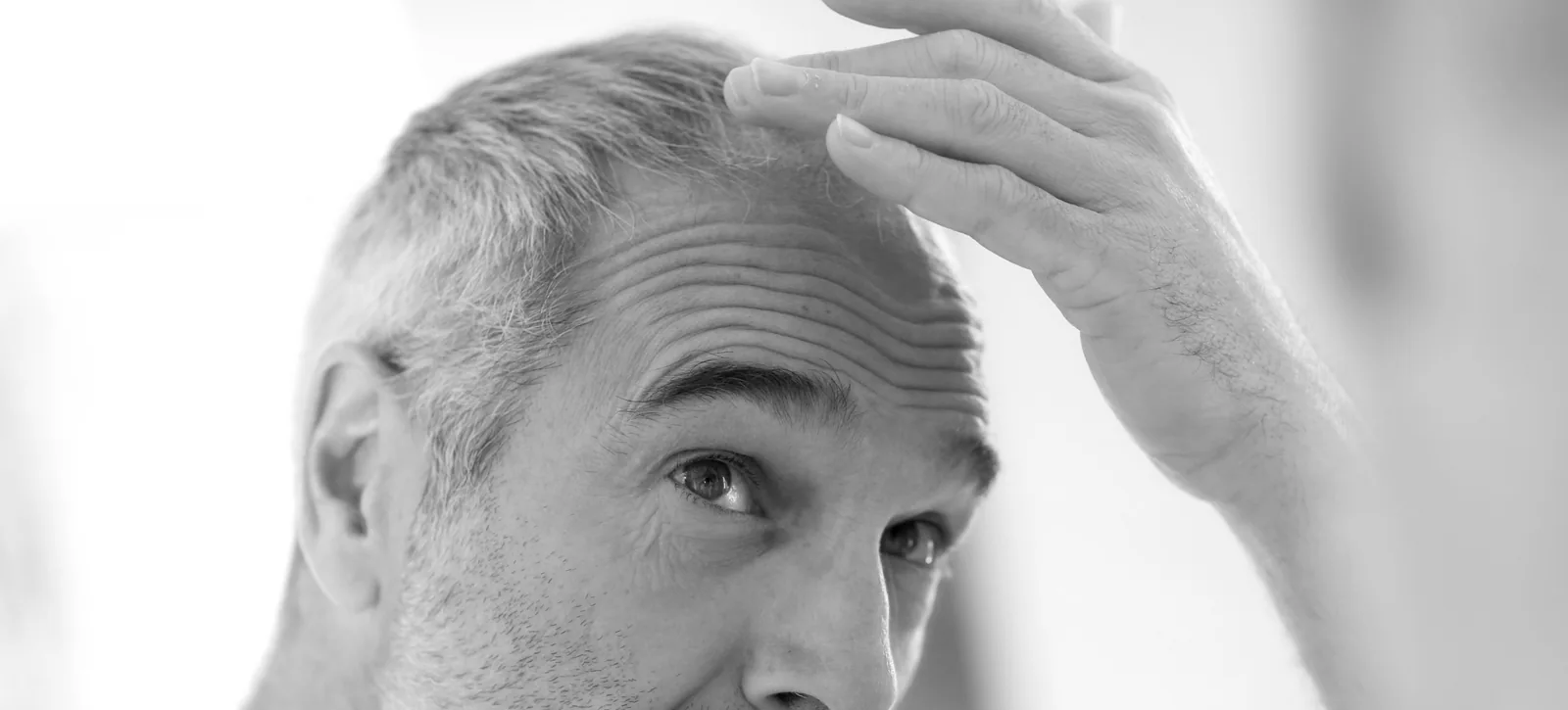
Homme examinant sa perte de cheveux, illustrant une greffe capillaire sans cicatrice réalisée par le Dr Pulvermacker à Paris

Hair transplantation in Paris 16 — the FUE technique

Hair transplantation consists in harvesting follicular units from an area not affected by hair loss, then reimplanting them in thinning areas. I use the motorised FUE technique, which does not require a strip of scalp to be taken.

Why does hair fall out?

In men, baldness is most often genetic in origin. Some hairs are sensitive to a male hormone, dihydrotestosterone (DHT). Contact between DHT and genetically programmed hairs prevents them from regenerating, hence their permanent loss.

The hair of the crown, around the head, is not sensitive to this hormonal influence: it does not fall out. That is precisely what makes transplantation possible: grafts taken from that area keep their insensitivity to DHT after reimplantation.

In women, a loss of density may also occur, particularly following difficult periods of life or hormonal imbalances. An assessment is then necessary before considering a transplant.

What is the FUE technique?

FUE — Follicular Unit Extraction — consists in harvesting follicular units individually, each containing two to four hairs, using a motorised micro-instrument.

It differs from the older strip-harvesting techniques, which left a linear scar on the scalp.

An important clarification: FUE leaves no linear scar, but it does leave tiny punctate scars on the donor area. They are hardly visible with short hair, but they exist. No transplant technique is genuinely « scarless ».

How does the procedure work?

After harvesting and processing, the follicular units are reimplanted using a Choi-type implanter, an instrument that simultaneously makes the micro-perforation in the scalp and introduces the graft.

A session lasts on average about an hour and a half.

How many grafts per session?

On average around 1,000 follicular units are implanted per session, that is 2,000 to 3,000 hairs.

The number of sessions needed depends on the extent of the area to be treated and on the density of the donor area, which is a limited resource: it is what sets the total number of grafts available over a lifetime.

What is the recovery like?

Recovery is generally straightforward.

Swelling may appear in the grafted region after twenty-four hours and spread down to the forehead and eyelids. It settles within three to four days.

Crusts form over the grafts and fall off after a week.

When does regrowth occur?

The transplanted hairs frequently fall out in the first weeks: this is a normal phase, the follicle remaining in place. Regrowth begins from the third month, at a rate of about one centimetre a month.

The final result is judged between six and twelve months.

What are the risks and the limits?

The risks include swelling of the forehead and eyelids, minimal bleeding, localised infection, transient folliculitis, changes in scalp sensation which are generally temporary, and a density of regrowth lower than hoped for.

The limits relate mainly to the donor area: its density sets the number of grafts available. Moreover, transplantation does not treat the cause of the hair loss: the original hairs, sensitive to DHT, continue to fall. Additional medical treatment may be discussed to slow this progression.

Frequently asked questions

Will the transplanted hair fall out again?

Grafts taken from the crown keep their insensitivity to DHT and do not fall out. On the other hand, the neighbouring untransplanted hairs may continue to fall, which can change the overall appearance over time.

Are several sessions needed?

Often, depending on the extent of the area to be covered and the density sought. The treatment plan is drawn up in consultation.

At what age should the procedure be carried out?

Hair loss that is still progressing in a young man makes designing the frontal hairline delicate: implanting too low or too early risks an incoherent result a few years later. The consultation makes it possible to assess this point.

Last updated: August 2026 · Medical content reviewed by Dr Benjamin Pulvermacker, board-qualified plastic surgeon in Paris 16.

Let us talk about your plan

The secretariat answers from Monday to Friday. You may also write : we call you back within 48 working hours.

Call Write