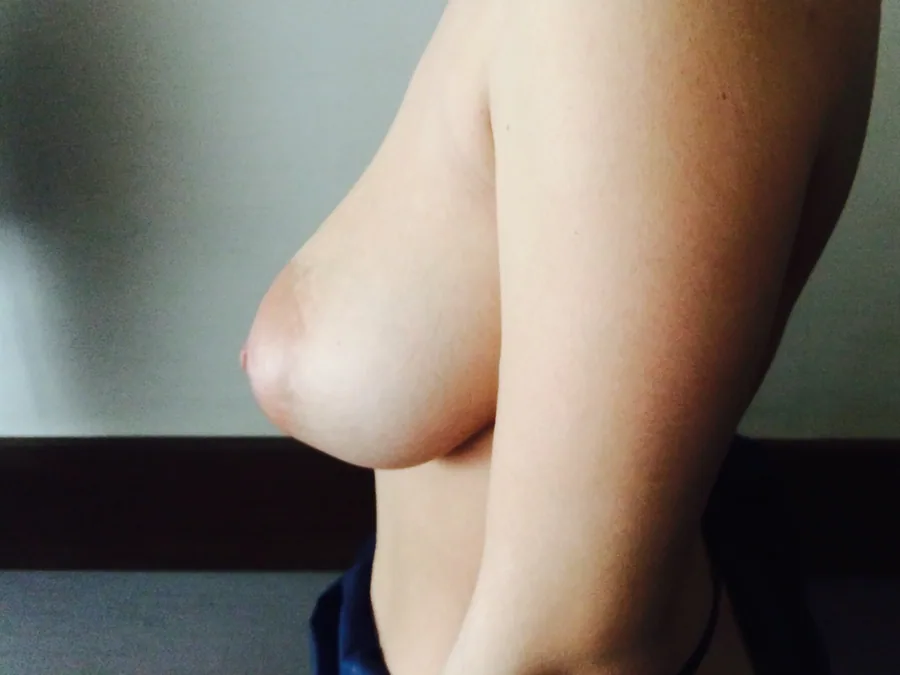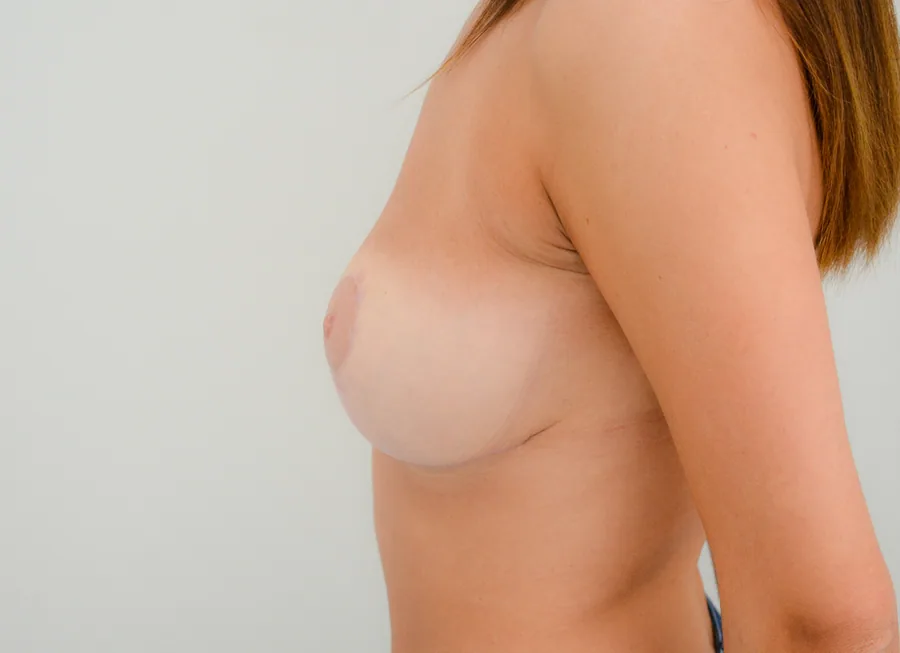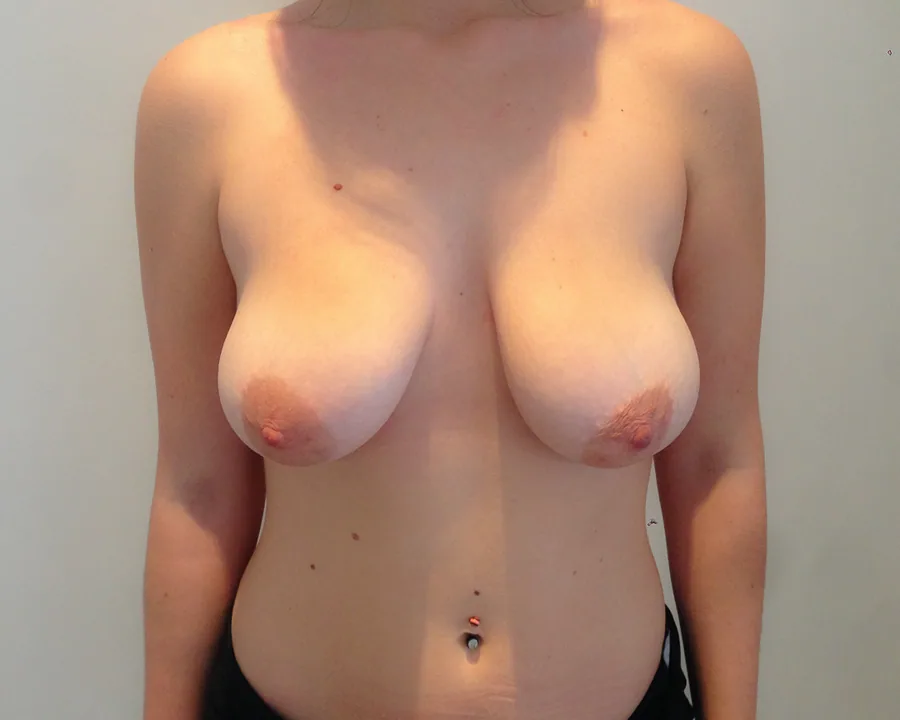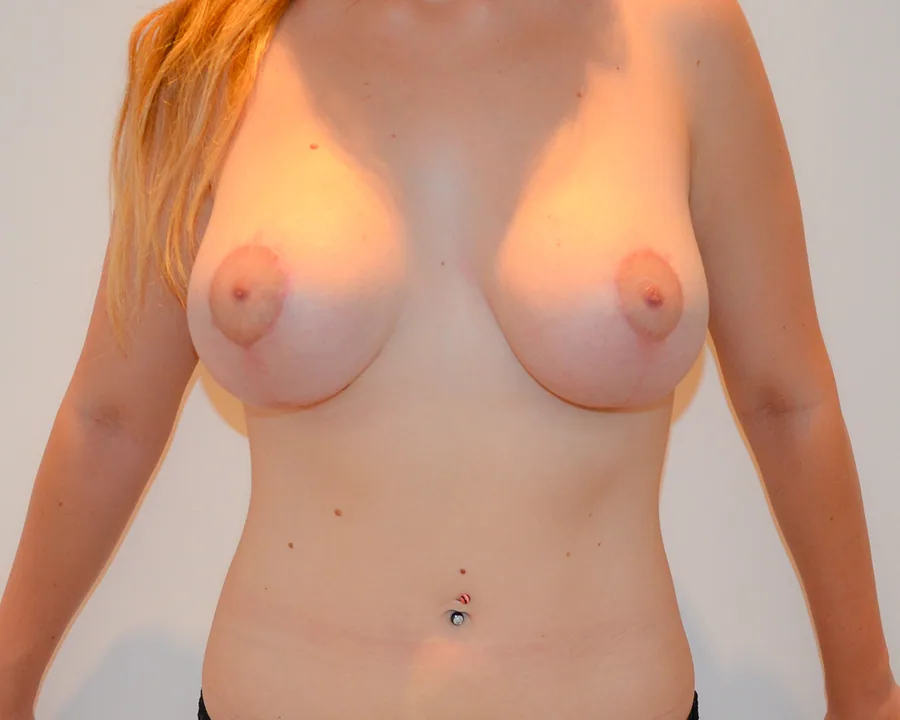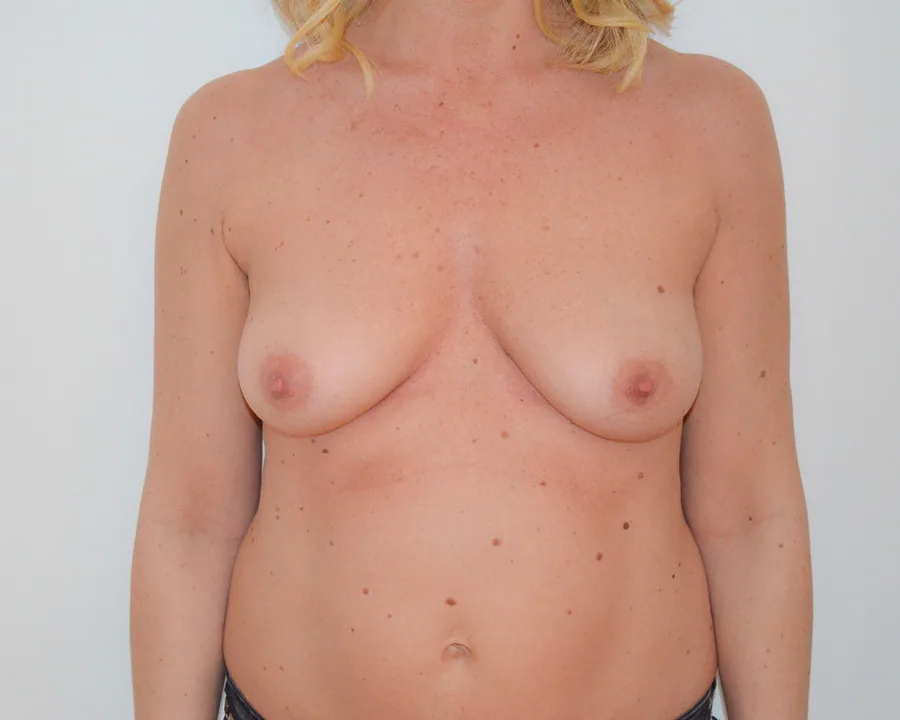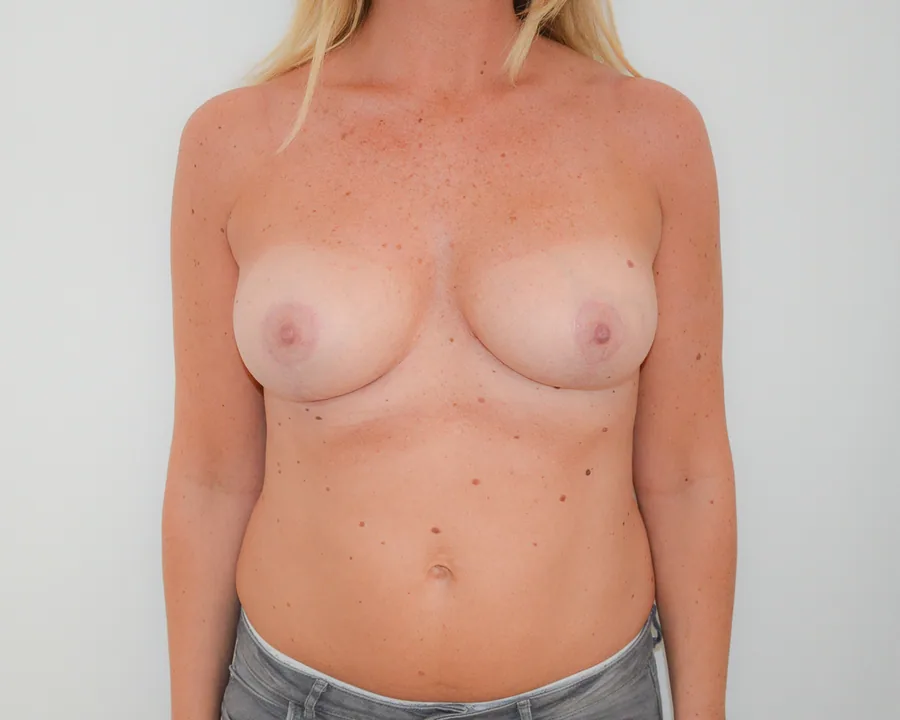
Breast ptosis: 4 cases in before-and-after photos
This gallery shows real results of correction of breast ptosis (mastopexy) carried out by Dr Benjamin Pulvermacker. Ptosis means the sagging of the breasts, with the areola positioned low.
The photographs, published with the patients' consent, are for information only.
To understand the mastopexy technique, see the page devoted to breast ptosis, or book a consultation.
How to read these breast lift photographs
The main landmark is the position of the areola in relation to the fold beneath the breast: with ptosis, it drops to the level of the fold or below it. After surgery, compare the height of the areola, the shape of the lower breast and the distribution of volume, which moves back up the chest.
The number of scars, from one to three, depends on the amount of skin to be removed, not on the surgeon's preference. Around one month they are at their most visible — red, sometimes itchy — and this is not their final appearance. The shape is final after six months; the scars continue to change for about eighteen months. A pregnancy, breastfeeding or a significant change in weight may alter the result.
Frequently asked questions
Are the photographs real results?
Yes. All the photographs shown are of patients operated on by Dr Pulvermacker and are published with their written consent.
Will my result be the same?
No. Every morphology, every skin quality and every process of healing is different: these images illustrate individual results.